7 Tips for Kayaking in Havelock’s Clear Waters
Published 20 September 2026
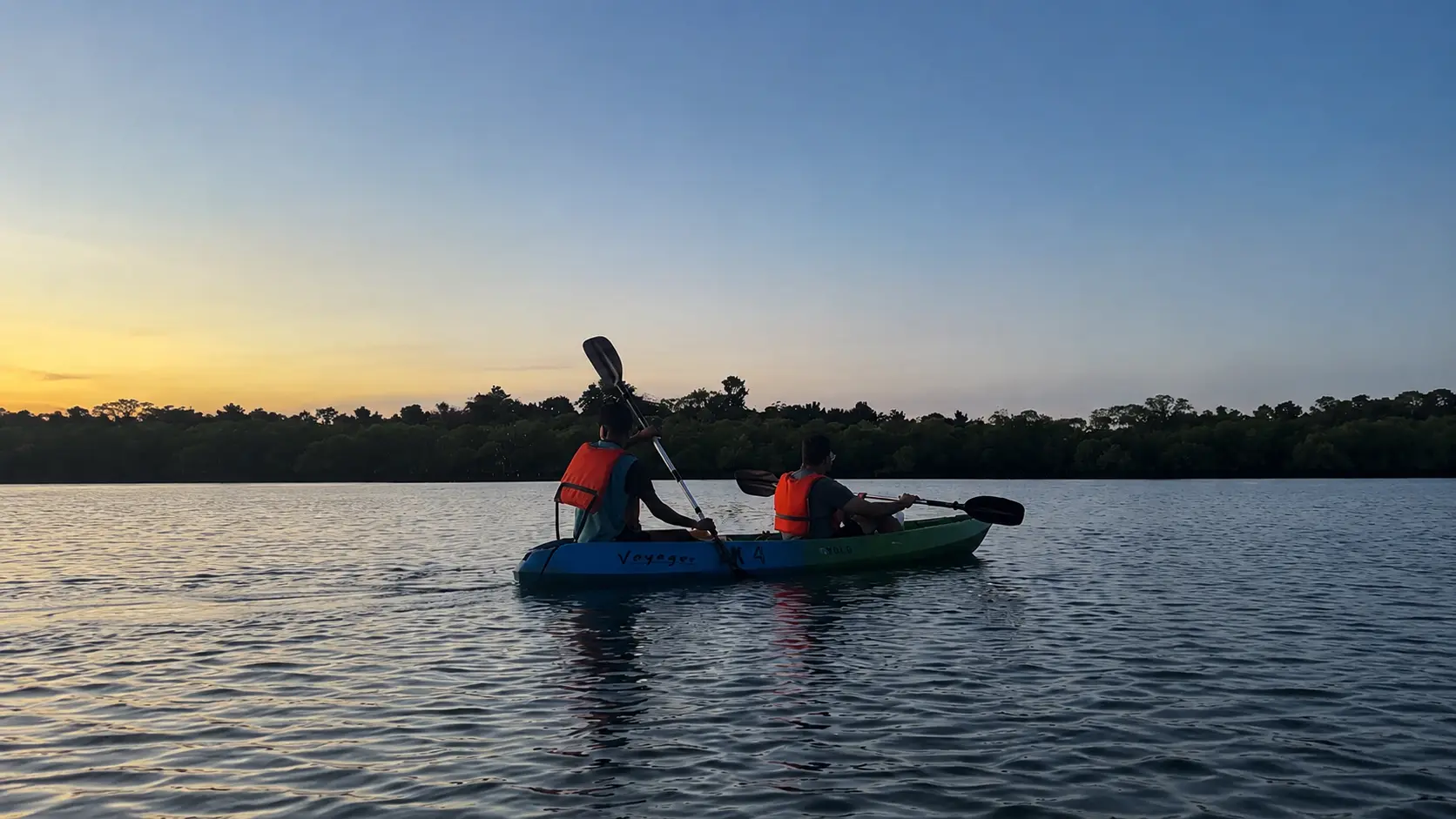
Going kayaking in Havelock? These 7 simple tips from the local guides at Andaman Mangrove Kayak will help you paddle better, stay safe, take great photos and enjoy the clear waters of Swaraj Dweep to the fullest, even if it is your first time in a kayak.
The first thing most guests say when they sit in a kayak in Havelock is, "Wow, I can see the bottom!" On a calm morning the water around Havelock is so clear that you can spot small fish, sea grass and rocks below your kayak, almost like looking through glass.
But clear water alone doesn't make a great kayaking trip. The right timing, the right clothes, a little bit of paddling skill and a good guide make all the difference. We have seen guests come back thrilled, and we have also seen guests get tired, sunburnt or lose a phone in the water because nobody told them the basics.
We are Andaman Mangrove Kayak, a local team in Havelock Island (Swaraj Dweep). We spend most of our days on this water, and these are the 7 tips we share with every guest before they start paddling.
Quick Answer: What Are the Best Tips for Kayaking in Havelock?
The best tips for kayaking in Havelock are: go with a trained local guide, plan your time around the tide and morning light, learn the basic paddle stroke, wear light quick dry clothes and strong sunscreen, keep your phone in a waterproof pouch, never touch coral or disturb marine life, and know your limits by staying hydrated and following safety rules. With these in place, kayaking in Havelock is easy and safe even for beginners and non swimmers.
Why Is the Water in Havelock So Clear?
Before we jump into the tips, it helps to understand why Havelock's water is special.
The Andaman Islands are far from big cities, big rivers and heavy industry. Less mud and dirt flows into the sea, so the water stays clean and see-through. Coral reefs and sea grass around the island also help keep the water healthy. During the calm season, when the waves are low, the sand settles down and the water becomes even clearer.
This is why kayaking in Havelock feels different from kayaking in most places in India. You are not just paddling on the water. You are watching a whole underwater world pass below you.
Clarity does change, though. After heavy rain or on windy days, the water can look cloudy. That brings us to our tips.
Tip 1: Always Go With a Trained Local Guide
This is the most important tip, and we say it first for a reason.
Havelock's waters look calm, but the sea has its own mood. Currents, tides, wind and sudden weather change can catch a new kayaker off guard. Some areas around the islands are also home to saltwater crocodiles, and only people who know these waters well can tell which areas are safe.
A good local guide will:
Choose a safe route based on the day's tide and weather
Give you a proper safety briefing before you start
Make sure everyone wears a life jacket
Stay close to the group the whole time
Show you things you would never notice alone, like hidden creeks, bird nests and small sea creatures
How to pick the right operator:
Ask if a trained guide paddles with the group, not just stands on the shore
Check that life jackets are in good condition and given to every guest
Prefer small groups over big crowds
Read recent guest reviews
Ask what happens if the weather turns bad
At Andaman Mangrove Kayak, our guides live in Havelock and paddle these waters almost every day. That local knowledge is something you can't get from a map or a video.
Tip 2: Time Your Trip Around the Tide and Morning Light
Timing can make or break your kayaking experience. Two things matter most: the tide and the light.
Follow the Tide
The sea around Havelock rises and falls twice a day. In the mangrove creeks, high tide gives you enough water to paddle deep inside the green channels. At low tide, some parts become too shallow and your kayak may touch the mud. On the open coast, the tide also affects how calm the water feels.
That is why a good operator does not give you the same time every day. Your slot may be early one morning and a little later the next. Trust the tide chart, not your alarm clock.
Go Early for the Clearest Water
Early morning is usually the best time for clear water. The wind is low, the sea is flat and the sunlight comes in at a soft angle. You can see deeper into the water, and the light is perfect for photos. By afternoon, the wind often picks up and small waves make the surface choppy.
Choose the Right Season
October to May: Best season. Calm sea, clear sky and good visibility.
December and January: Peak tourist months. Book early.
March to May: Hot but very calm. Go early to avoid the strong afternoon sun.
June to September: Monsoon. Rough sea, rain and frequent cancellations. Not ideal.
Planning Night Kayaking?
If you want to see glowing water (bioluminescence), go on a dark night close to the new moon. On full moon nights the glow is very weak. Always check the moon phase before you book.
Tip 3: Learn the Basic Paddling Technique
You don't need to be an expert, but knowing a few basics will make your trip easier and much less tiring. Most first timers use only their arms and get tired in 20 minutes. Paddle the right way and you can go for hours.
How to Hold the Paddle
Hold the paddle with both hands, a little wider than your shoulders.
Keep your grip relaxed. Holding too tight makes your hands and arms tired quickly.
Make sure the curved side (the scoop) of the blade faces you.
How to Sit
Sit straight with your back against the seat.
Keep your knees slightly bent and your feet resting on the foot pegs if your kayak has them.
Don't lean back. Good posture gives you more power with less effort.
The Forward Stroke
Put the blade fully into the water near your feet.
Pull it back along the side of the kayak until it reaches your hip.
Lift it out and repeat on the other side.
Turn your upper body a little with each stroke. Your body does the work, not just your arms.
How to Turn
To turn right, paddle harder or make a wide sweep stroke on the left side. To turn left, do the same on the right side. To slow down or stop, put the paddle in the water and push forward gently.
Tips for Double Kayaks
Most couples and families use double kayaks. Here's how to avoid the common fights:
The stronger or more confident paddler sits at the back and steers.
The person in front sets the rhythm. The back person follows the same timing so paddles don't hit each other.
Talk to each other. Simple words like "left", "right" and "stop" make a big difference.
Your guide will show you all this during the briefing. Take a few minutes to practice in shallow water before heading out.
Tip 4: Dress Smart and Protect Yourself From the Sun
The sun in Andaman is strong, and on the water it feels even stronger because light bounces off the surface. Many guests get sunburnt without even noticing until the evening.
What to Wear
Quick dry shorts or track pants. Avoid jeans. They get heavy and uncomfortable when wet.
A light t-shirt or rash guard. A full sleeve rash guard is great for sun protection.
Strap sandals or water shoes. Flip flops can slip off easily. Avoid closed shoes.
A cap or hat. One with a strap is best so the wind doesn't blow it away.
Sunglasses with a strap. They cut the glare from the water and help you see below the surface better.
Sun Protection
Apply sunscreen 20 to 30 minutes before you start.
Choose a reef safe sunscreen if you can. Some regular sunscreens harm coral.
Don't forget your ears, neck, back of the hands and top of the feet. These are the places that burn most in a kayak.
Use lip balm with SPF.
For Evening and Night Sessions
Mosquitoes and sandflies can be active near the mangroves after sunset. Carry insect repellent and wear something light that covers your arms and legs.
Tip 5: Keep Your Phone Safe and Take Better Photos
Everyone wants pictures of that clear water. Here's how to get them without losing your phone.
Protect Your Gear
Use a waterproof pouch with a neck strap for your phone. Test it before the trip by putting a tissue inside and dipping it in a bucket of water.
Don't carry DSLR cameras unless you have a dry bag and are confident on the water.
Leave jewellery, watches and anything valuable at your hotel.
Carry a small bottle of drinking water in a bag that can get wet.
Photo Tips for Clear Water
Shoot in the morning. The light is soft and the water is calm, so you can see deeper.
Shoot straight down for underwater views. When the sun is behind you, the reflection on the water reduces and the sea bed shows clearly.
Use polarised sunglasses trick. If you have polarised sunglasses, hold them in front of your phone camera to cut the glare on the water.
Capture the kayak in the frame. A photo of your kayak's front with clear water below tells the story better than just water.
Take short videos. The movement of the paddle through clear water looks great in slow motion.
At Andaman Mangrove Kayak, our guides are used to helping guests with photos and short videos, so you can focus on enjoying the moment.
Tip 6: Respect Marine Life, Coral and Mangroves
The clear water of Havelock exists because the ecosystem here is still healthy. As visitors, it is our job to keep it that way.
Never Touch or Stand on Coral
Coral may look like rock, but it is a living animal. One touch or step can damage years of growth. In shallow areas, be careful not to let your paddle or feet hit the coral. If your kayak drifts close to a reef, gently push away using the water, not the coral.
Don't Disturb Wildlife
Don't chase fish, crabs or birds.
Don't feed any animals. It changes their natural behaviour.
Keep your voice low near the mangroves. Birds and small creatures come out more when it is quiet.
Protect the Mangroves
Don't break branches or pull out roots.
Don't take shells, coral pieces or anything from nature as a souvenir. Collecting such things is not allowed in many protected areas.
Leave No Trace
Carry back everything you bring, especially plastic bottles and wrappers.
If you see trash floating in the water and it is safe to pick up, take it back with you.
Mangroves protect Havelock from storms and act as a home for baby fish. Coral reefs feed the whole marine life around the island. When you respect them, you help keep Havelock's water clear for the next traveller.
Tip 7: Know Your Limits and Follow Safety Rules
Kayaking in Havelock is safe and easy for most people, but a little care goes a long way.
Before the Trip
Eat a light meal. Don't go on an empty stomach, and don't eat a heavy meal right before.
Drink enough water. Dehydration is common in the Andaman heat.
Tell your guide about any health issues like back pain, heart problems, asthma or recent surgery.
Avoid alcohol before kayaking.
During the Trip
Wear your life jacket at all times, even if you know swimming.
Stay close to the group and follow your guide's directions.
Take short breaks if your arms feel tired. There is no race.
Sip water regularly.
What If Your Kayak Tips Over?
It rarely happens on calm water, but it helps to know what to do:
Stay calm. Your life jacket will keep you floating.
Hold on to your kayak and paddle. The kayak floats and gives you support.
Wait for your guide. They are trained to help you get back in.
Can Non Swimmers Join?
Yes. Many of our guests don't know swimming. With a life jacket, a stable kayak and a guide nearby, non swimmers enjoy kayaking in Havelock without any problem.
Listen to the Weather
If your operator cancels or shifts your slot because of wind, rain or rough sea, please understand. It is always for your safety. This is also why we suggest keeping at least one free day in your Havelock plan.
Bonus Tips From Our Guides
Go to the washroom before you start. There are no toilets inside the creeks or on the water.
Carry a small amount of cash. Havelock has limited ATMs and mobile network can be weak in some spots, so UPI may not always work.
Book early in peak season. December and January slots fill up fast.
Ask questions. Our guides love to share stories about the mangroves, local birds and island life. The more curious you are, the better your trip.
Slow down. The best moments come when you stop paddling, sit quietly and just watch.
Who Will Enjoy Kayaking in Havelock?
First timers: Calm water and guided trips make it a perfect start.
Couples and honeymooners: Sunrise, sunset and night kayaking are very romantic.
Families: Children can join with a parent in a double kayak.
Nature lovers and photographers: Clear water, mangroves and birds give endless photo moments.
Solo travellers: A peaceful way to see a quieter side of the island.
Final Words
Havelock's clear waters are one of the most beautiful things you will see in India. With the right guide, the right timing and a few simple habits, your kayaking trip can easily become the best memory of your Andaman holiday.
Remember these 7 tips: go with a local guide, follow the tide and morning light, learn the basic stroke, dress smart for the sun, protect your phone, respect nature and know your limits. Do this and the island will do the rest.
When you are ready to paddle, the Andaman Mangrove Kayak team is here to help. Share your dates, and we will find the perfect slot for clear water, calm sea and a peaceful ride through Havelock's mangroves.
Happy paddling!